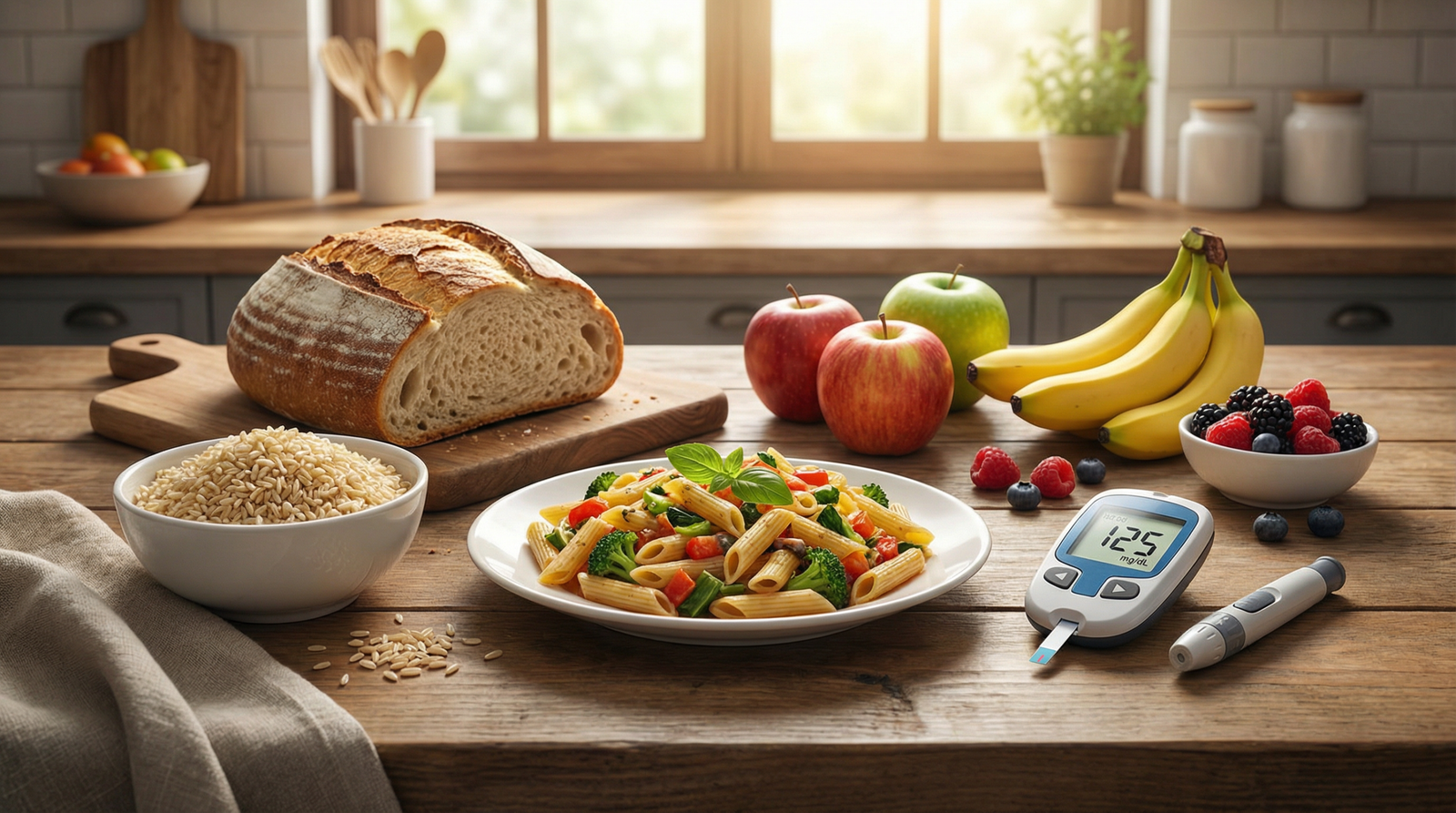
How Carbohydrates Affect Blood Sugar: A Complete Guide
Carbohydrates are a primary source of energy for the body and a key component of a balanced diet. However, for individuals with diabetes or insulin resistance, understanding how different types of carbohydrates affect blood sugar is crucial for effective management. This guide will break down the relationship between carbohydrates and blood sugar, and introduce the concepts of the glycemic index and glycemic load.
The Journey of Carbohydrates in Your Body
When you consume foods containing carbohydrates, your digestive system breaks them down into glucose (sugar). This glucose then enters your bloodstream, causing your blood sugar levels to rise. In response, your pancreas releases insulin, a hormone that helps your cells absorb the glucose to be used for energy or stored for later use.
For individuals with a healthy insulin response, this process works efficiently, and blood sugar levels return to a normal range shortly after a meal. However, in people with insulin resistance or diabetes, this system is impaired. Either the body doesn’t produce enough insulin, or the cells don’t respond to it properly, leading to prolonged periods of high blood sugar.
Not All Carbs Are Created Equal: Simple vs. Complex
Carbohydrates can be broadly categorized into two groups: simple and complex. This distinction is important because they are digested and absorbed at different rates, leading to different effects on blood sugar.
| Type | تفصیل | Effect on Blood Sugar | Examples |
|---|---|---|---|
| Simple Carbohydrates | Made up of one or two sugar molecules and are quickly digested and absorbed | Cause a rapid spike in blood sugar levels | Table sugar, honey, candy, sugary drinks |
| Complex Carbohydrates | Made up of long chains of sugar molecules and take longer to break down | Absorbed more slowly, resulting in a gradual and sustained release of glucose | Whole grains, legumes, starchy vegetables |
The Glycemic Index (GI) and Glycemic Load (GL)
To further understand how different carbohydrate-containing foods affect blood sugar, we can use two important tools: the glycemic index (GI) and the glycemic load (GL).
Glycemic Index (GI)
The glycemic index is a scale from 0 to 100 that ranks carbohydrate-containing foods by how much they raise blood sugar levels. Foods with a high GI are rapidly digested and cause a large, rapid increase in blood sugar. Foods with a low GI are digested more slowly, resulting in a smaller, more gradual rise in blood sugar.
| GI Category | GI Range | Food Examples |
|---|---|---|
| Low GI | 55 or less | Most fruits and vegetables, beans, minimally processed grains, pasta, low-fat dairy foods, and nuts |
| Medium GI | 56-69 | White and sweet potatoes, corn, white rice, couscous, breakfast cereals such as Cream of Wheat and Mini Wheats |
| High GI | 70 or more | White bread, rice cakes, most crackers, bagels, cakes, doughnuts, croissants, most packaged breakfast cereals |
Glycemic Load (GL)
The glycemic load takes into account both the glycemic index of a food and the amount of carbohydrates in a serving. It provides a more accurate picture of a food’s real-world impact on blood sugar. A food can have a high GI but a low GL if it contains a small amount of carbohydrates per serving.
For example, watermelon has a high GI (80), but a serving of watermelon has so little carbohydrate that its glycemic load is only 5.
Practical Tips for Managing Carbohydrate Intake
- Choose whole, unprocessed foods: Focus on a diet rich in non-starchy vegetables, legumes, and whole grains.
- Pair carbohydrates with protein and healthy fats: This can help slow down the absorption of glucose and prevent blood sugar spikes.
- Be mindful of portion sizes: Even healthy carbohydrates can raise blood sugar if eaten in large quantities.
- Read food labels carefully: Pay attention to the total carbohydrate content, as well as the amount of fiber and sugar.
By making informed choices about the types and amounts of carbohydrates you eat, you can better manage your blood sugar levels and improve your overall health.
Want to learn more about diabetes-friendly nutrition?
Explore our comprehensive guides on diet and nutrition for people with diabetes.
Additional notes
Carbohydrates are a fundamental component of our diet and a primary source of energy for the body. However, for individuals managing diabetes or insulin resistance, understanding how carbohydrates impact blood sugar is crucial for maintaining good health. When you consume foods containing carbohydrates, your digestive system breaks them down into glucose (sugar), which then enters the bloodstream. [1] This guide will explore the relationship between carbohydrates and blood sugar, differentiate between various types of carbs, and provide actionable strategies for making healthier choices.
Carbohydrates are one of three macronutrients, alongside protein and fat. Their main function is to provide energy for cellular activities. When glucose enters the bloodstream, it triggers the pancreas to release insulin, a hormone that helps transport glucose into the cells to be used for energy or stored for later use. [2] The speed at which this process occurs depends on the type of carbohydrate consumed.
Carbohydrates are generally categorized as either simple or complex, based on their chemical structure and how quickly they are digested and absorbed.
| Carbohydrate Type | تفصیل | Examples |
|---|---|---|
| Simple Carbohydrates | Composed of one or two sugar molecules, they are rapidly digested, leading to a quick spike in blood sugar. | Table sugar, honey, fruit juice, white bread, pastries, and sugary drinks. |
| Complex Carbohydrates | Made up of long chains of sugar molecules, they are digested more slowly, resulting in a more gradual increase in blood sugar. | Whole grains (oats, quinoa, brown rice), legumes (beans, lentils), and starchy vegetables (sweet potatoes, corn). |
Simple carbohydrates are broken down quickly, causing a rapid and significant rise in blood glucose levels. This can be problematic for individuals with insulin resistance, as their bodies struggle to manage the sudden influx of sugar. [3] In contrast, complex carbohydrates are digested more slowly, leading to a more gradual and manageable increase in blood sugar. This is because they often contain fiber, which slows down the absorption of sugar. [4]
For individuals with diabetes or insulin resistance, the goal is not to eliminate carbohydrates entirely, but to make smarter choices. Here are some practical tips:
Choose High-Fiber, Complex Carbohydrates: Prioritize whole grains, legumes, and non-starchy vegetables. These foods are digested more slowly and have a gentler impact on blood sugar.
Limit Simple and Refined Carbohydrates: Reduce your intake of sugary drinks, sweets, white bread, and other processed foods. These provide little nutritional value and can cause rapid blood sugar spikes.
Pay Attention to Portion Sizes: Even healthy carbohydrates can raise blood sugar if eaten in large quantities. Be mindful of your portion sizes to help manage your blood glucose levels.
Combine Carbohydrates with Protein and Healthy Fats: Eating a balanced meal that includes protein and healthy fats can help slow down the absorption of carbohydrates and prevent blood sugar spikes. [4]
Understanding the relationship between carbohydrates and blood sugar is a cornerstone of effective diabetes management. By focusing on complex carbohydrates, paying attention to portion sizes, and creating balanced meals, you can enjoy the benefits of this essential macronutrient while keeping your blood sugar levels in a healthy range. As always, it is recommended to work with a healthcare provider or registered dietitian to create a personalized nutrition plan that meets your individual needs.
[1] American Diabetes Association. (n.d.). Carbs and Diabetes. Retrieved from https://diabetes.org/food-nutrition/understanding-carbs
[2] Harvard T.H. Chan School of Public Health. (n.d.). Carbohydrates and Blood Sugar. Retrieved from https://nutritionsource.hsph.harvard.edu/carbohydrates/carbohydrates-and-blood-sugar/
[3] GoodRx. (n.d.). What Are Carbs and How Do They Affect Blood Sugar. Retrieved from https://www.goodrx.com/well-being/diet-nutrition/carbs-and-blood-sugar?srsltid=AfmBOoq9FjPTKGVi11YKMwVJkazxr2zhgJL8GJ2FLn-PjgCrF_Xa2OXs
[4] Joslin Diabetes Center. (2021, July 8). Effects of Carbs, Protein and Fats on Glucose Levels. Retrieved from https://joslin.org/news-stories/all-news-stories/education/2021/07/carbs-protein-fats
 English
  Arabic
  Spanish
  Urdu
Urdu