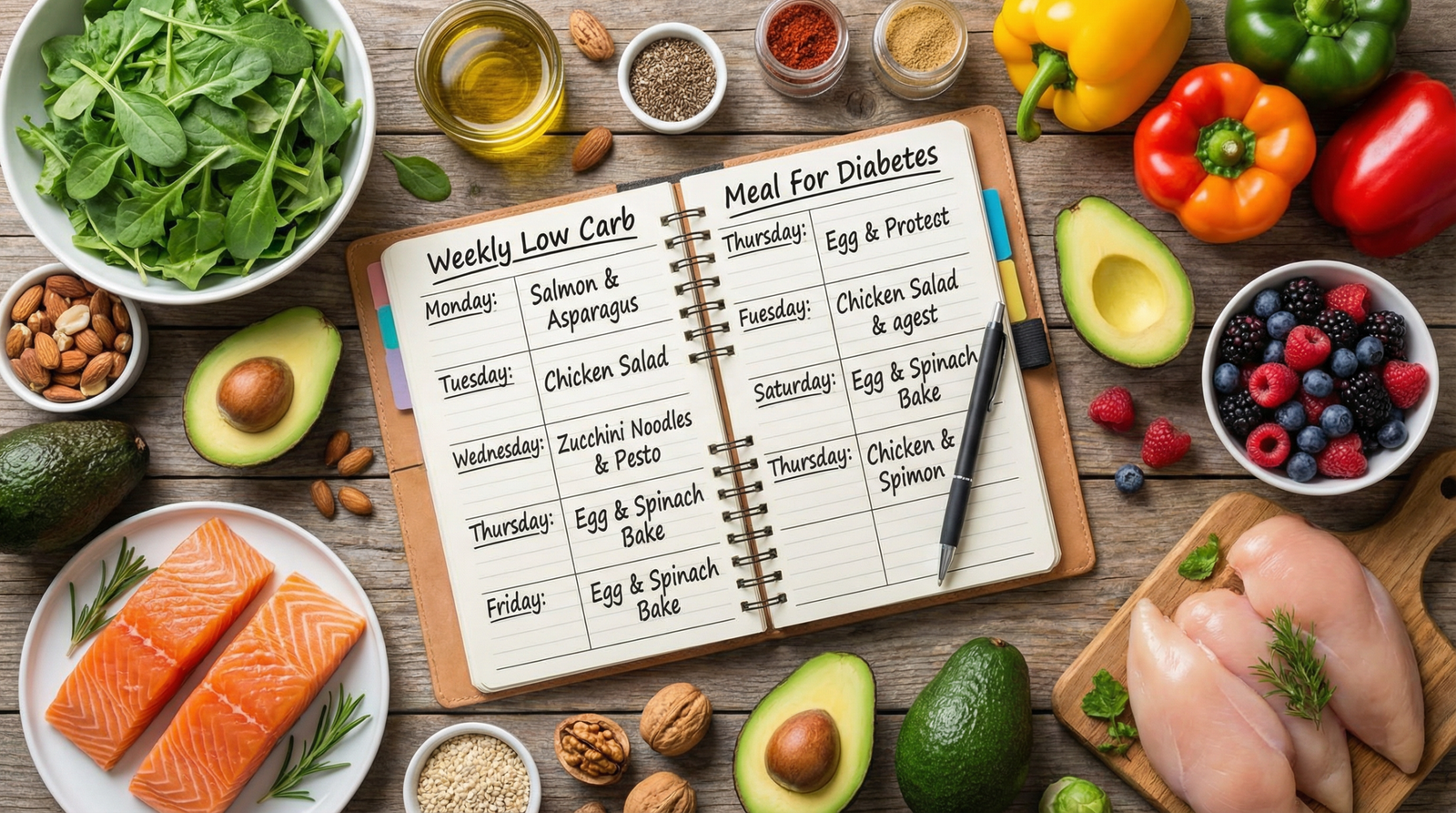
The information presented in this article serves educational purposes but it should not replace professional medical guidance. A qualified healthcare provider needs to be your first step before you make any adjustments to your diet or exercise plan or health management approach. A Beginner’s Guide to Low-Carb Meal Planning for Diabetes A low carbohydrate diet functions as an efficient method to control blood sugar while helping people with diabetes lose weight and achieve better health results. The reduction of carbohydrate consumption helps patients maintain stable blood glucose levels which leads to decreased medication requirements. People encounter various challenges when they begin following a low-carb diet plan. The guide provides essential information about low-carb meal planning to help you begin your journey with confidence. Understanding Carbohydrates and Diabetes Carbohydrates have the most significant impact on blood sugar levels. Your body processes carbs into glucose which then moves into your bloodstream. The body of a person with diabetes either makes insufficient insulin or fails to use insulin properly which results in elevated blood sugar levels. A low-carb diet works to prevent this condition because it stops glucose from entering the blood stream at the beginning of the process. Key Principles of a Low-Carb Diet for Diabetes A successful low-carb diet for diabetes is not about eliminating carbs entirely but about choosing the right types and amounts of carbohydrates. Here are the core principles: Focus on Non-Starchy Vegetables: These are your best friends on a low-carb diet. They are low in carbs and calories but high in fiber, vitamins, and minerals. Examples include leafy greens, broccoli, cauliflower, bell peppers, and zucchini. Protein intake at each meal will help you stay full while keeping your blood sugar stable. The list of good protein sources includes chicken and fish along with turkey and eggs and tofu and legumes. Healthy fats serve as an essential component of a low-carb diet. The body obtains energy from these fats while they work to protect heart health. Choose from avocados and olive oil along with nuts and seeds as your sources. The best way to reduce your intake of refined carbohydrates consists of cutting back on sugary drinks and sweets and white bread and pasta and processed foods that contain high amounts of refined carbohydrates. The article Understanding the Glycemic Index and Glycemic Load provides detailed information about how various foods influence blood sugar levels. A Sample 1-Day Low-Carb Meal Plan Here is an example of what a day of low-carb eating might look like: | Meal | Food Choices | | :——– | :———————————————————————————————————— | | Breakfast | Scrambled eggs with spinach and a side of avocado. | | Lunch | A large salad with grilled chicken, mixed greens, cucumber, tomatoes, and a light vinaigrette dressing. | | Dinner | Baked salmon with a side of roasted asparagus and a small portion of quinoa. | | Snack | A handful of almonds or a small Greek yogurt. | Tips for Successful Low-Carb Meal Planning Plan Ahead: Take some time each week to plan your meals and create a shopping list. This will help you stay on track and avoid impulse food choices. Read Food Labels: Pay attention to the total carbohydrate count on food labels to make informed decisions. Stay Hydrated: Drink plenty of water throughout the day. The body can confuse thirst signals with hunger signals at times. Don’t Be Afraid of Fat: Healthy fats are essential for a balanced low-carb diet. The combination of these ingredients creates both taste satisfaction and fullness. The body sends signals which indicate when you are hungry and when you have eaten enough. The portion sizes need to be modified according to the requirements of the person. The Takeaway Adopting a low-carb diet can be a powerful tool in your diabetes management toolkit. People who choose whole nutrient-rich foods while creating meal plans will achieve successful carbohydrate reduction which leads to blood sugar stability and better health outcomes. Our Diabetes-Friendly Recipes section contains additional recipe ideas that you can find there. References Low-Carb Diet and Meal Plan – Diabetes UK A Guide to Healthy Low-Carb Eating with Diabetes – Healthline Diabetes Meal Planning – CDC
Related articles



 English
  Arabic
  Spanish
  Urdu
Urdu